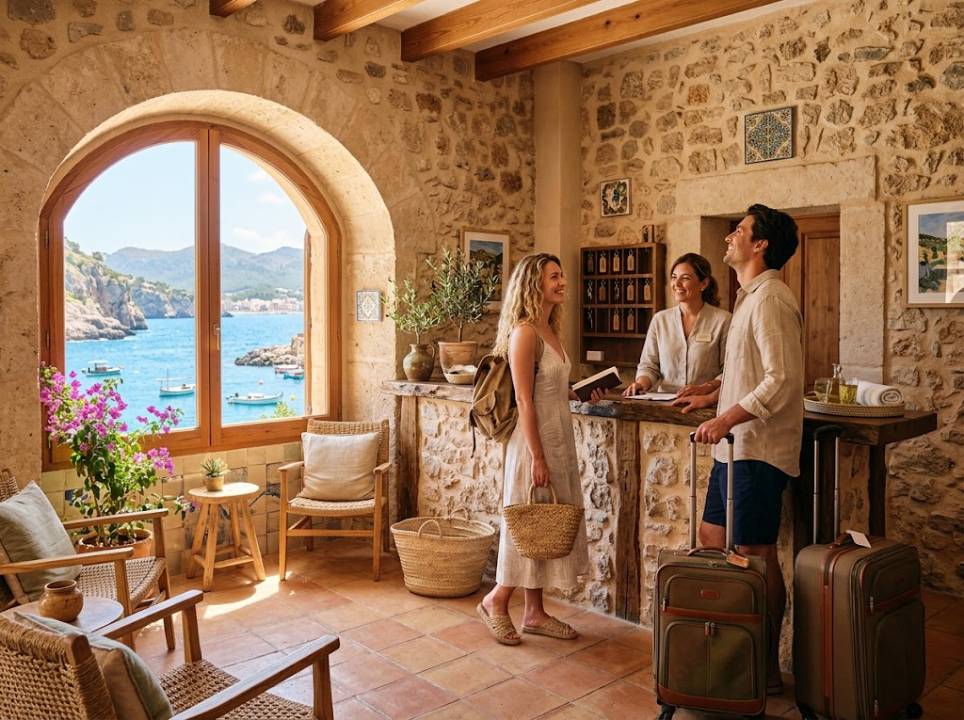
Every summer, millions of visitors arrive in Mallorca. Germans form the largest group, followed by British, Scandinavian, Dutch, French and Swiss travellers, plus a growing number of guests from the United States and Eastern Europe. For hotels on the island, this means that almost every guest-facing text needs to exist in several languages.
Done well, multilingual communication feels effortless to guests. Done badly, it produces confusing menus, awkward booking emails and online reviews that mention the translations rather than the view.
Where hotels need translation
- Website pages, room descriptions and booking engines
- Confirmation emails, pre-arrival messages and upsell offers
- Restaurant menus, allergen information and wine lists
- Spa treatment descriptions and activity programmes
- Safety instructions, pool rules and emergency information
- Terms and conditions, cancellation policies and privacy notices
Some of these texts change daily, like menus and activity schedules. Others, like legal terms, change rarely but must be precise.
German guests, high expectations
German travellers are loyal visitors to the Balearics, and many return to the same hotel every year. They appreciate detailed, accurate information and notice quickly when a German text has been machine translated. Room categories, board options and what exactly is included in the price should be crystal clear.
Hotels that invest in professional german translation services for their website and key emails often see fewer questions at reception and fewer complaints about misunderstandings over what was booked.
French and Swiss visitors
French-speaking guests from France, Belgium and Switzerland form another important group. They tend to value elegant, well-written descriptions, especially for gastronomy and wellness. A menu that describes a dish with care in French sells better than one that simply lists ingredients. Reliable french translation services help hotels present their restaurant and spa in a way that matches the expectations of this audience.
Menus and allergens
Food translation is harder than it looks. Regional dishes such as sobrasada, tumbet or ensaïmada have no direct equivalents. Translators must decide whether to keep the local name and add a short description, or to find a comparable term. Allergen information, however, must be absolutely accurate. A mistake here is not a matter of style but of guest safety.
Keeping many versions consistent
A hotel group with several properties may publish content in six or seven languages. Every seasonal update multiplies the work. Using memory translation software allows translators to reuse approved phrases such as room types, standard policies and amenity descriptions, so that only new or changed sentences need fresh translation.
This keeps wording identical across the website, booking engine and printed materials, and reduces costs noticeably over the course of a season.
Reviews and guest messages
Guests leave reviews in their own languages, and hotels are expected to respond. Replying in the guest's language shows attention and care. Many hotels prepare response templates in their main languages and adapt them for each review. Incoming messages via chat or email can be understood with the help of translation tools, but replies to complaints deserve a human touch.
Staff and internal communication
Hotel teams in Mallorca are multilingual too. Seasonal staff come from mainland Spain, Latin America, Eastern Europe and North Africa. Safety training, hygiene rules and internal procedures may need versions in Spanish, Catalan and other languages to ensure everyone understands them properly.
Search engines and booking platforms
Travellers search in their own languages and use different terms. A German guest may search for "Familienhotel mit Kinderbetreuung", a British guest for "adults only boutique hotel". Localised keywords in titles and descriptions help hotels appear in the right searches and on the right booking platforms.
Nordic and Dutch guests
Scandinavian and Dutch visitors usually speak excellent English, and many hotels rely on English for them. Yet a website or welcome letter in Swedish, Danish, Norwegian or Dutch makes a strong impression, particularly for families and older travellers. For hotels competing for loyal repeat guests from these markets, even a small set of translated key pages can make a difference in bookings.
Planning before the season
The best time to update translations is during the quieter winter months. New room categories, restaurant concepts and packages can be written, translated, reviewed and published before the first charter flights arrive. Leaving translation to April or May usually means rushed work, higher costs and errors that stay online all summer.
Measuring the effect
Hotels can track the results of better translations. Booking conversion rates by language, the number of pre-arrival questions, and mentions of language in reviews all give useful signals. When a German or French version performs clearly worse than the English one, the text itself is often part of the reason.
An island built on hospitality
Mallorca has welcomed international visitors for more than a century. Its success rests on making people from many countries feel at home. Clear, warm and accurate communication in each guest's language is part of that promise, as important as clean rooms and a good breakfast.